
Authentication Methods
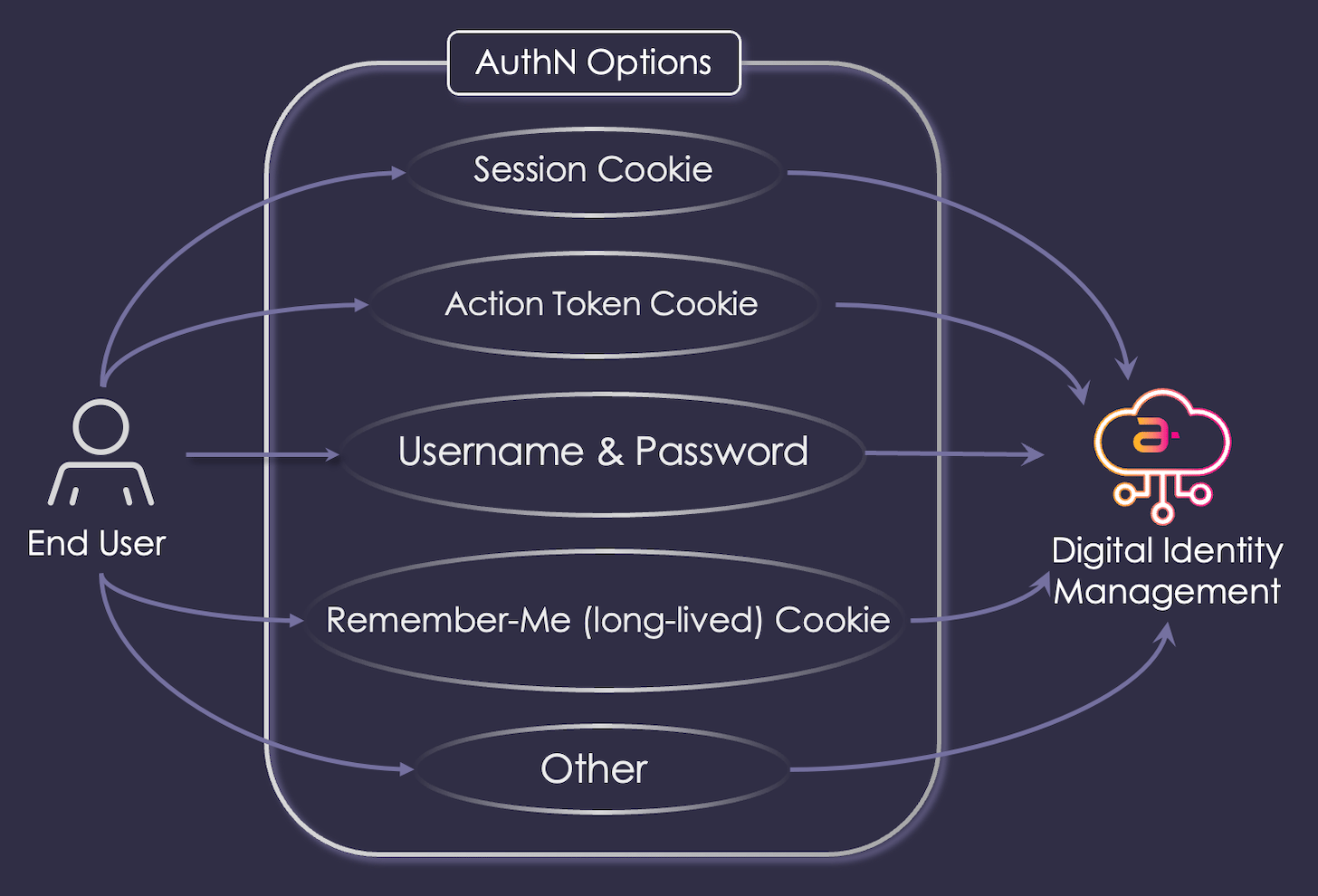
Below are a few common authentication methods: Password-based Authentication An user presents their username and password to an application, and the application passes that information to the Identity Provider (IdP) service in a REST API request. The IdP consumes and validates those credentials and, if successful, opens a session on the server. The IdP service then informs the front end application in the API response.
HTTP Cookie Authentication
In web-based applications, when a user authenticates with a service, the browser stores one or more cookies into the user’s browser. These cookies reference the user’s open session on the IdP server. If the user closes or navigates away from the application, and then returns at a later date, the IdP can inspect those cookies to recreate the user’s session without the need for the user to reauthenticate on the front end.
Token-based Authentication
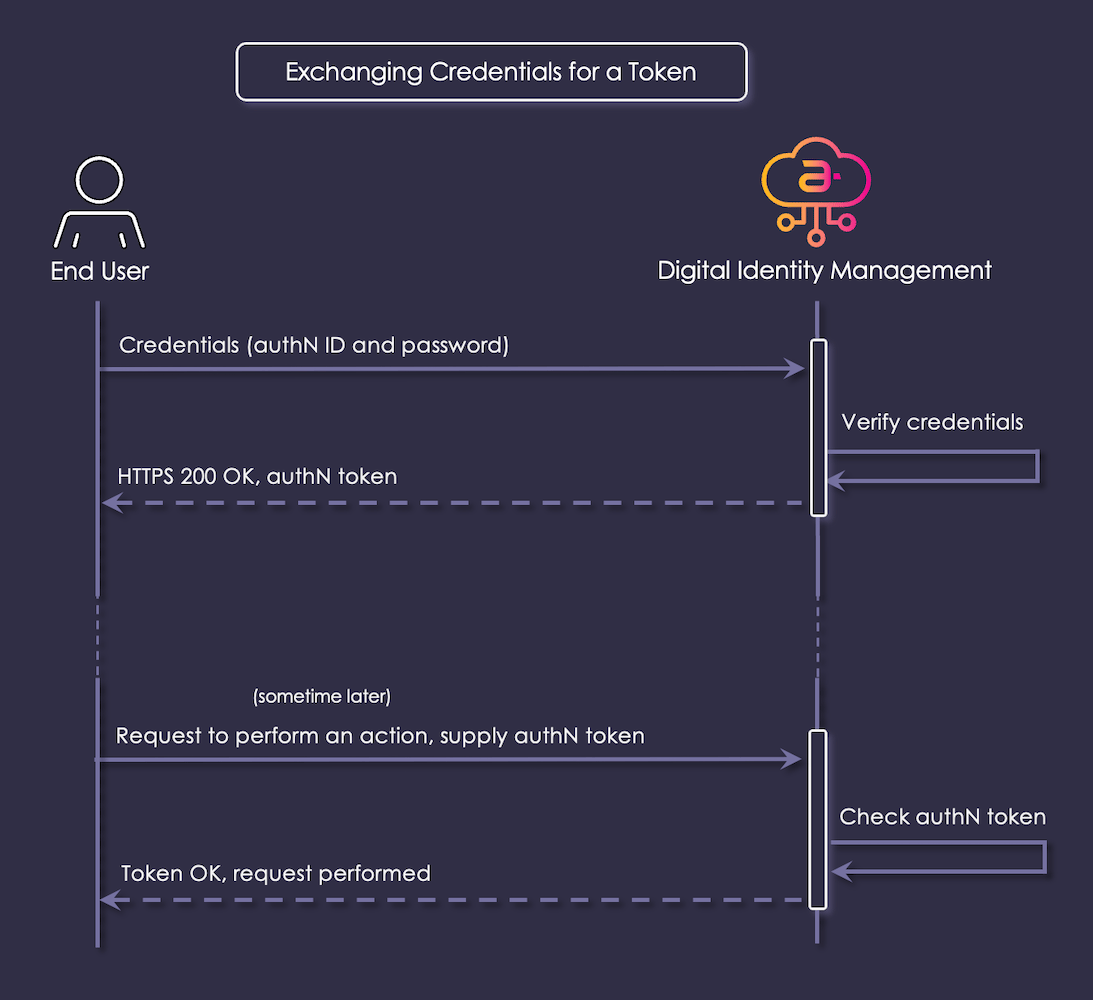
This is the operation of presenting a user’s actual credentials (authN ID and password) in exchange for an access token (for example, an HTTP cookie or OAuth2.0-based access token) which represents the user authentication.