
Identity Provider (IdP)
An Identity Provider (IdP) is a service that onboards, authenticates, and manages user identities. It enables authenticated users to access secure resources and services. Digital Identity Management provides an Identity App, that provides an idp service to manage user authentications and associated data for your organization. Google and Facebook are two examples of platforms that have invested millions in building, managing, and continuously improving their own proprietary IdP. When a user tries to access a resource on Facebook, they must input credentials into a login page. Behind the scenes, credentials are verified by Facebook’s IdP and if correct, the service authenticates the user. IdPs help to reduce the number of credentials required on a per-user basis. Ideally, a user has just one set of credentials. This helps minimize the chance of the user forgetting their credentials and becoming frustrated.Single Sign-On (SSO)
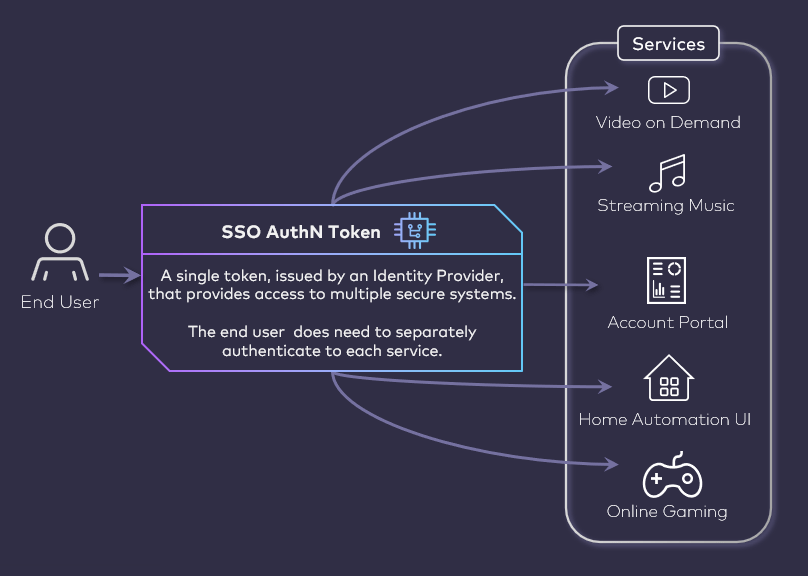
Single Sign-On (SSO) enables a user to enter their credentials and authenticate with an IdP once, and then get access to multiple apps without having to authenticate again. SSO and a robust IdP helps reduce login-related issues and help desk tickets, increase speed for users to authenticate and use new apps, and increase integration speed of new apps to the overall platform. If your organization has more than one application within an ecosystem, Digital Identity Management negotiates authentication from a central Identity app to every individual application that is registered with the platform, and ensures a seamless user experience across all services.
- Verifies who the user is, and that they are authenticated
- Grants that service access to the Digital Identity Management User ID (for example, to render a user profile in the service)
- Provides user management APIs so that the user can perform profile management within that service