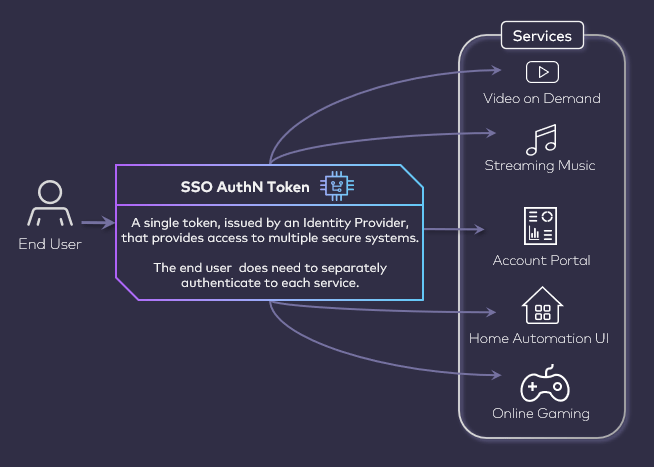
Single sign-on (SSO) is an authentication method that allows a user to log in with a single ID and password to any of several related, yet independent, software systems.It is inconvenient for end users to constantly re-enter their credentials when they navigate across applications. Likewise, in a complex ecosystem of multiple applications, it is not a good idea for every application, server, or user interface to handle a user’s credentials. Passwords are precious, and the less systems that directly handle them, the less opportunities there are for security bugs to result in those passwords being compromised.Instead, it is beneficial to leverage an SSO solution that ties access to those separate systems into a more secure and seamless user experience. SSO is a mechanism whereby user authentication happens only once, ideally in one location that serves as the Identity Provider (IdP). Once the end user authenticates, that authentication is then brokered out to other applications or components in a system through front channel or back channel communications between the IdP and those systems.There are several methods and mechanisms to provide SSO. Digital Identity Management supports the OAuth 2.0 framework and its identity-focused extension called OpenID Connect (OIDC) to deliver SSO capabilities to service providers.