

activating status, pending verification of the email.
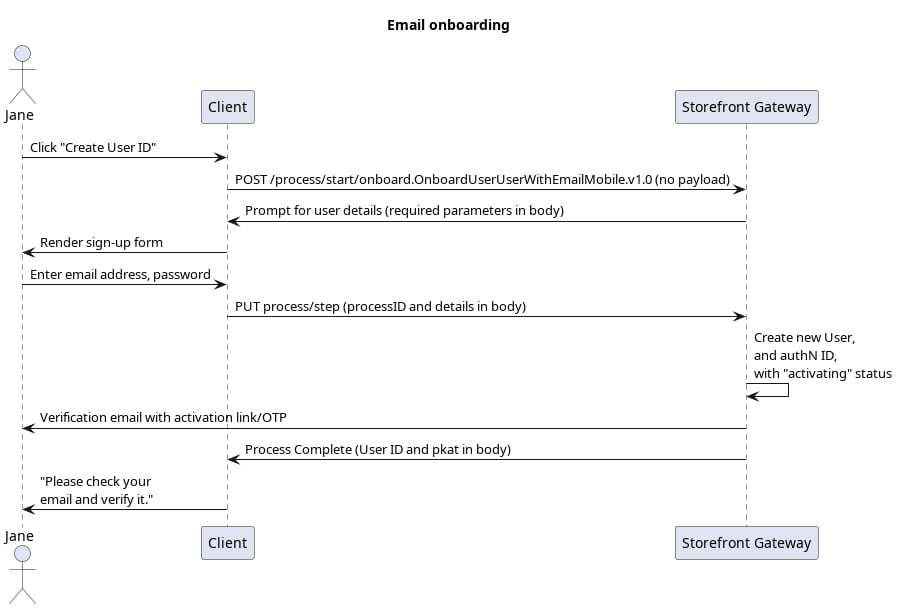
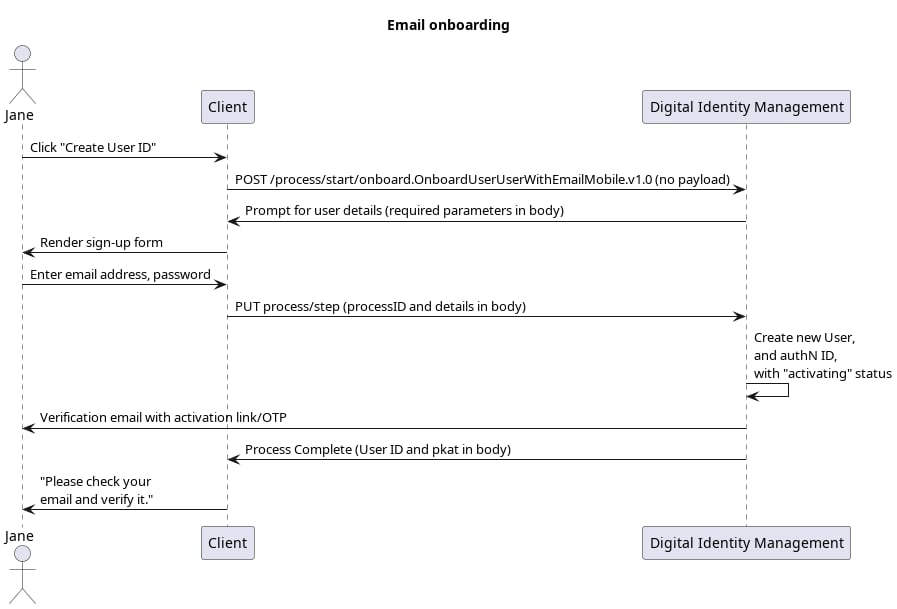
Initial Request
Your client calls the POST /process/start/{processName} API to initialize the Process:Response
Digital Identity Management responds with a request for user information:Next Request: User Details
Your client calls the PUT /process/step API, and passes the user-supplied info to the Process.Process Complete
If the email and password pass validation, then the Process creates and saves a user to the data store, and returns a200 HTTP status:
[GET /session/token?customToken=\{OTP\}&pkat=\{pkat\}](c_sessionToken#) API to invoke the subsequent Activate User Process to complete the user onboarding.
In cases where the user is anonymous, the PKAT is required if the application wants to provide a quick token resend option on the UI, using the [PUT /session/token?pkat=\{pkat\}](c_putSessionToken) API. This method applies to cases where the user is anonymous (i.e., they are not authenticated in Digital Identity Management). However, if the user is currently authenticated in Digital Identity Management, the client application can instead invoke the Resend Verification Process for this purpose.
Parent topic:Onboard and Authenticate with Email Address